

News
New peptide candidate compound: Preclinical studies in the metabolic field show promising progress.
Date:
14 Apr,2025
Metabolic diseases are a group of disorders caused by abnormalities in the body’s metabolic processes, primarily stemming from disruptions in the synthesis, breakdown, or excretion of substances within the body—such as carbohydrates, fats, and proteins. These disruptions lead to imbalances in energy utilization or nutrient metabolism. Such conditions can arise due to genetic factors, environmental influences, lifestyle choices, and other contributing elements, often resulting in either an accumulation or deficiency of specific metabolites, which in turn triggers a wide range of clinical symptoms and health issues. Metabolic diseases encompass several types, including diabetes (characterized by elevated blood glucose levels), obesity (linked to disordered fat metabolism), hyperlipidemia (associated with abnormal lipid metabolism), gout (caused by impaired uric acid metabolism), and metabolic syndrome, which typically includes conditions like hypertension, high blood sugar, high cholesterol, and obesity. Among these, obesity stands out as a complex, multifactorial condition deeply influenced by both genetic and environmental factors. Notably, obesity rates and mortality associated with it have been steadily rising over the years in both developed and developing countries, making it one of the most pressing global health challenges today.
In the face of today’s alarming global obesity epidemic, Wanbangde Pharmaceutical Group Co., Ltd. has strategically developed a novel class of small-molecule cyclic peptides targeting melanocortin receptors (MCR), aiming to deliver a differentiated therapeutic approach in the metabolic disease space. Recently, the company’s groundbreaking new candidate compound has yielded promising preclinical data, demonstrating the anticipated effects of "reducing fat while preserving muscle" in obese mouse models.

Obesity-related health risks and complications
Mechanism of action
The metabolic regulatory effects of MCR's novel cyclic peptide stem from its activation of the melanocortin-4 receptor (MC4R). As the "central commander" of energy homeostasis, MC4R exerts its influence through a multi-faceted regulatory network, helping to suppress excessive food intake, modulate glucose and lipid levels, and maintain muscle homeostasis—thereby promoting overall metabolic and energy balance.
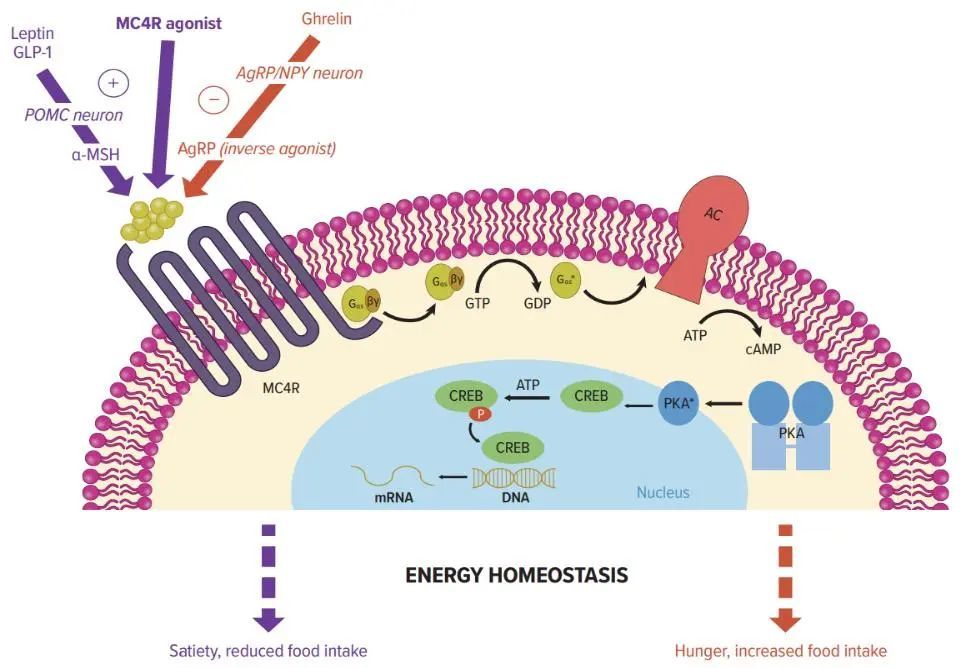
The black adipose tissue-mediated mechanism regulating energy balance
α-Melanocyte-stimulating hormone (α-MSH) activates melanocortin receptor 4 (MC4R), which in turn triggers the activation of G-protein (Gαs). This leads to the subsequent activation of adenylate cyclase (AC), an enzyme that converts adenosine triphosphate (ATP) into cyclic adenosine monophosphate (cAMP). The cAMP-mediated activation of protein kinase A (PKA) causes the dissociation of PKA's catalytic subunits. Once the active PKA catalytic subunit (PKA*) translocates into the nucleus, it phosphorylates the transcription factor CREB (cAMP response element-binding protein). When phosphorylated CREB (CREB-P) binds to the upstream consensus DNA sequence—the cAMP response element (CRE)—it interacts with the core transcription machinery, thereby promoting the transcription of genes involved in metabolic and energy balance regulation.
AC: Adenylyl cyclase; AgRP: Agouti-related protein; α-MSH: Alpha-melanocyte-stimulating hormone; CREB: Cyclic AMP response element-binding protein; GLP-1: Glucagon-like peptide-1; MC4R: Melanocortin receptor 4; NPY: Neuropeptide Y; PKA: Protein kinase A; POMC: Proopiomelanocortin.
Preclinical experiments: The Effects of MCR's Novel Cyclic Peptide on Body Weight, Body Fat, and Muscle
To comprehensively evaluate the efficacy of MCR's novel cyclic peptide, we selected semaglutide, a widely used GLP-1 receptor agonist in the metabolic field, as the positive control. Using a diet-induced obesity (DIO) model in male C57 mice—designed to mimic the progression of human obesity—we administered a high-fat diet throughout the 7-week treatment period. The study included a negative control group (treated with vehicle alone), a positive control group (administered semaglutide), and groups receiving low- and high-dose MCR novel cyclic peptides, as well as a combination group where MCR was used in conjunction with semaglutide. By comparing weight changes, fat accumulation, muscle mass alterations, and other relevant parameters across the different treatment groups, we assessed the pharmacodynamic properties of the compound.
Experimental results showed that, during the consumption of a high-fat diet, compared to the blank solvent group:
1. Different dosage groups all showed varying degrees of weight loss;
2, When administered alone, semaglutide significantly reduced both the absolute fat mass and the fat-to-body-weight percentage (%), while also leading to a modest decrease in absolute muscle mass (approximately 8% lower than baseline by the end of the study).
3, Treatment with the novel MCR cyclic peptide alone (high-dose group) resulted in a significant reduction in both absolute fat mass and the fat-to-body weight percentage (%), though the reduction was less pronounced compared to semaglutide. Meanwhile, absolute muscle mass showed a modest increase—approximately 4% higher at the end of the experiment compared to baseline.
4. When combining semaglutide with the novel MCR cyclic peptide, the degree of fat reduction was comparable to that achieved with semaglutide alone, while the decline in absolute muscle mass was slightly improved compared to using semaglutide alone (at the end of the experiment, muscle mass had decreased by approximately 4% relative to baseline).
5, Each group also observed positive effects on various blood glucose and lipid indicators.
Interpreting the experimental results:
From the data, the company’s newly developed MCR novel cyclic peptide not only reduces fat but also promotes muscle preservation and growth. When used in combination with semaglutide, it further helps mitigate the effects of muscle loss.
The unique pharmacological mechanisms underlying MCR's novel cyclic peptides enable them to not only reduce body weight and decrease fat accumulation but also effectively enhance muscle mass, leading to positive effects on overall metabolic health.
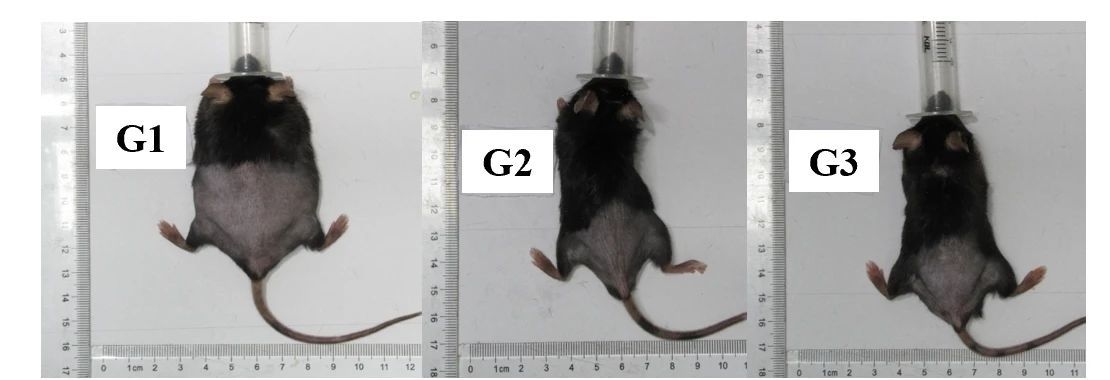
G1 Blank Solvent Group G2 Semaglutide Group G3 MCR Novel Cyclic Peptide Group
Meaning: Driving Innovation from the Lab to the Clinic
Wanbangde Pharmaceutical Group has achieved promising results in the research and development of innovative peptide-based drugs. Notably, the project—from target identification to molecular optimization—was entirely developed in-house, securing 100% independent intellectual property rights. The project is now poised to enter the next critical phase, supporting clinical IND submissions and paving the way for the subsequent development of these groundbreaking peptide-based therapies.
From a clinical application perspective, the novel MCR cyclic peptide holds promise in offering diverse therapeutic options for individuals struggling with overweight and metabolic imbalances. It can help regulate body weight and reduce fat accumulation while preventing muscle loss—or even promoting muscle gain—thereby improving patients' metabolic health and lowering the risk of associated complications.
Related Recommendations